
Smart Cities and Sustainable Facilities Management - The Same Side of the Same Coin?
- Dave Collins, PhD

- Jun 3, 2019
- 4 min read
Updated: Jan 15
On the 23rd of May, I was fortunate enough be invited to speak on the following topic - 'The Relation Between the Concepts of Sustainable Facilities Management and Smart Cities' in form of my trial lecture for my Doctoral defence. Whilst I already knew a linkage between the two existed, the essentialness of them was a fascinating discovery when preparing for my talk.

Before I get into the nitty-gritty, what is a 'Smart City'? This is not an easy question to answer due to the lack of a solid and universally accepted definition of the term. However, for the purposes of clarity, Deakin and Al Waer's (2011) 'Four Factors' are a good starting point:
–Implementation of an extensive range of digital and other electronic technologies in cities and their communities
–
– Usage of information technology to change the lives and work of people living in these areas
–
–Implementing a wider spread of use of these technologies and others at governmental level
–
–Using technology to bring people together to innovate and enhance knowledge
With this in mind, we can see that a Smart City is a city with technology embedded in it to (ideally) improve the lives of citizens and adapt to the needs of future cities. With 66% of the world's population estimated to live in cities by 2050 (Source: https://www.iec.ch/smartcities), initiatives such as smart cities are essential in ensuring that cities are not just optimised, but are also safe and provide sufficient levels of essential resources to citizens.
But how can facilities management play a role in this exciting new re imagining of cities? The answer could be more substantial than you might think.
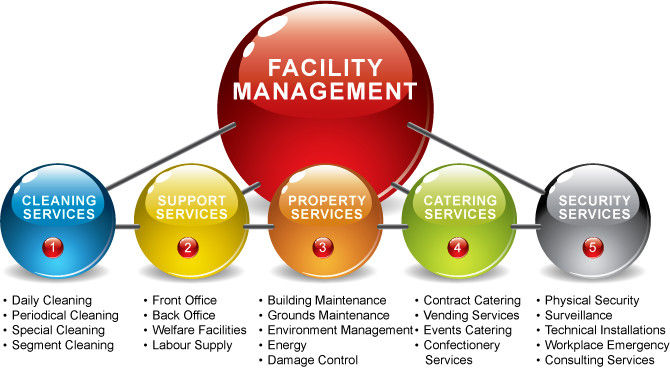
Whilst many people think of a facilities manager as a person in a boilersuit and a toolbox, the roles of modern days facilities managers are so much more than that. In the diagram below, you can see just how vast the variety of roles there are in facilities management today:
When we look at qualities found in Smart Cities, many of the same role linkages can be found there aswell:
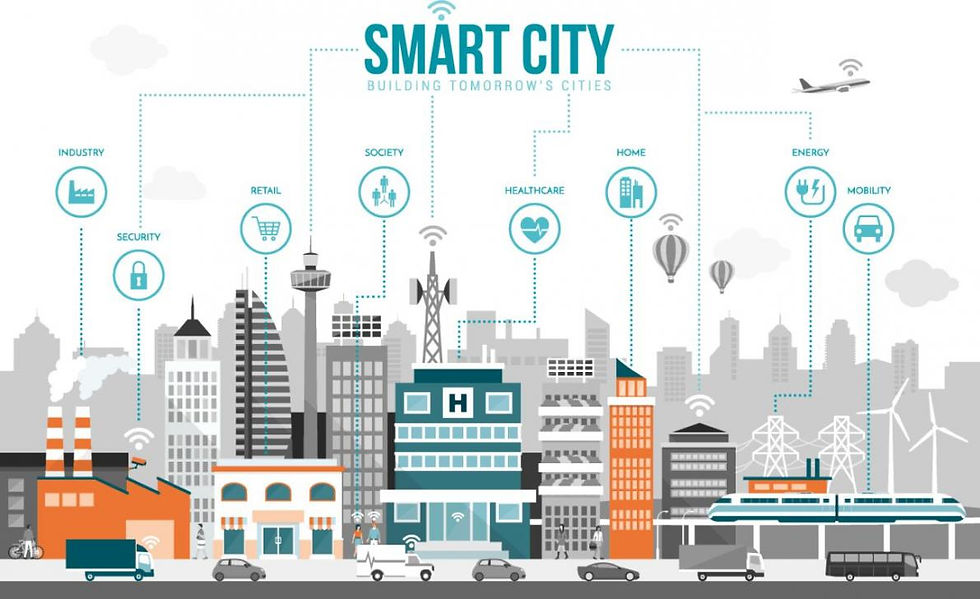
Not only do the components that make up a Smart City see direct connections with the obligations of facilities management (such as security on the above image), but also have a keen focus on the sustainability qualities found in most modern Smart Cities initiatives.
Facilities management is uniquely positioned to champion the sustainable credibility of building stock, with the facilities managers being the 'champions of their buildings' with real muscle to flex with regards to sustainable development. From impacting user behaviour (i.e. encouraging people to turn off the lights at the end of the day) to influencing sustainable maintenance policies (LED light fittings), facilities managers not just important, but essential to the development of a more sustainable building environment (Collins, 2019).
I am writing this post in Trondheim in Norway, and I don't have to look very far from my workplace to see these two aspects coming together. The project to which I am referring to is NTNU's exciting and (reasonably) new Smart Cities project - +CityxChange.

+CityxChange is a large project in cooperation with other cities with the aim of aligning the UN Sustainable Development Goals with technology to address wider community issues. They hope to help governments improve services and urban operations, with a particular emphasis on ensuring that future cities can be inclusive, safe, resilient and also sustainable ( Source: https://cityxchange.eu/context ).

But, how does sustainable facilities management fit into this picture? Well, +CityxChange is already working on a Smart Grid project that would require essential intervention by sustainable facilities managers in order to achieve it.

With high energy efficiency in buildings abd the monitoring of energy use and smart homes being core acpects of this initiatve, facilities management is an important and vital component part in a smart grid project such as this.
Facilitiesnet discusses the role of facilities management in smart grids at length. Smart meters are just one example of how facilities management and smart systems can work hand in hand to achieve positive results in the context of sustainability. They claim, for example, that smart metering could save up 8.8 billion kWh hours annually, with a good knowledge of building management systems and smart meters being essential in reaching this figure (Facilitiesnet, 2009). This energy consumption data can not only provide feedback to grid level to better accommodate energy demand for whole cities, but may also have the scope to provide user analytics to better optimise city services that require energy, or even the development further new products and services.
There are of course many more ways that Smart Cities and sustainable facilities management can work together, and we are only just beginning to understand how we can push this potential further. Through projects as +CityxChange and other service level initiatives from the likes of FM global company ISS (see: https://www.servicefutures.com/iot-smart-cities-game-changing-facilities-management), we can develop cities and services better adapted for changing habits, tastes, whilst also minimising our environmental impact in the longer term to make these resiliant fotr the needs and demans for future generations.
References
Collins, David. (2019) Green Leasing A Study of the Barriers and Drivers for Green Leased Offices in Norway. 2019. ISBN 978 82 326 3899 4.
Deakin & Al Waer (2011) From intelligent to smart cities, Intelligent Buildings International, 3:3, 133-139, DOI: 10.1080/17508975.2011.586673
https://cityxchange.eu/context
https://www.facilitiesnet.com/powercommunication/article/How-Smart-Grid-Impacts-Facility-Management--11363
https://www.iec.ch/smartcities
Comments